

The Dryer Maintenance Step Many Central Indiana Homeowners Forget
You empty the lint screen after doing laundry, so your dryer vent must be clean too, right? Not necessarily. Cleaning the lint trap after every load is one of the simplest and most important things you can do to keep your dryer running safely, but the lint screen only catches some of the lint and debris created as clothing tumbles and dries.
Over time, lint can move beyond the screen and collect inside the dryer exhaust duct, the vent that runs from the back of your dryer to the exterior of your home. For homeowners comparing dryer vent cleaning Central Indiana services, understanding what happens inside that hidden duct is an important first step. A simple maintenance issue can become a serious airflow problem and a potential fire hazard.
Why Dryer Lint Is More Than an Annoyance
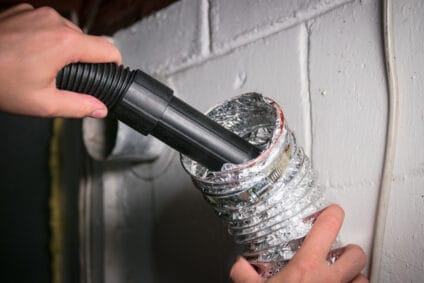
Lint is made up largely of tiny fibers shed from clothing, towels, bedding, and other fabrics. It is also combustible. When lint accumulates inside a dryer exhaust system, it can restrict airflow. Instead of efficiently exhausting hot, moist air outside, the dryer may have to work harder and run longer.
The U.S. Fire Administration reports that failure to clean was the leading factor contributing to ignition in 31% of home clothes-dryer fires in its 2018 to 2020 data. Cleaning the dryer and its vent system is more than a matter of convenience. It is a basic home safety step.
Clean the Lint Screen After Every Load
This part is simple: clean your dryer’s lint screen before or after every load. Do not wait until the lint becomes thick enough to peel away in one sheet. A clogged screen restricts airflow through the dryer, which can increase drying time and make the appliance work harder.
Periodically inspect the screen as well. Fabric softeners and dryer sheets can leave residue on the mesh that is less obvious than lint. If the screen looks coated or airflow seems restricted, clean it according to the dryer manufacturer’s instructions.
The Vent You Cannot See Still Needs Attention
Your dryer may have several feet, or considerably more, of exhaust duct hidden behind walls, above ceilings or underneath floors before it reaches the exterior of the house. Every bend and every additional foot of ductwork creates another opportunity for lint to accumulate. Cleaning the lint screen does not remove material that has already entered the exhaust duct.
The National Fire Protection Association recommends cleaning the dryer vent pipe at least annually, and more often when clothes begin taking longer than normal to dry. Professional dryer vent cleaning for Central Indiana homeowners scheduled as routine maintenance can help clear buildup from areas that are difficult to inspect from either end of the vent.
7 Warning Signs Your Dryer Vent May Need Cleaning
Your dryer will often give you clues when airflow is becoming restricted. Watch for:
- Clothes taking longer than normal to dry
- Loads requiring a second drying cycle
- Clothes feeling unusually hot when removed
- The dryer itself becoming excessively hot
- A burning or unusually hot smell while drying
- Lint accumulating behind or around the dryer
- Weak airflow from the exterior dryer vent
If you notice a burning smell, stop using the dryer until you identify the cause. Continuing to run an appliance that may be overheating is not worth the risk.
Check the Vent Outside Your Home
Homeowners can perform a simple airflow check from outside. Turn the dryer on and walk to the exterior exhaust termination. The exterior vent flap should open while the dryer is operating, and you should feel air coming out of the vent.
If the flap barely moves or does not open, there may be an airflow restriction somewhere in the system. Also inspect the termination for visible lint accumulation, animal nesting material, or other debris. The U.S. Fire Administration specifically recommends ensuring the outdoor vent cover opens while the dryer is operating.
Long Dryer Vent Runs Can Create Additional Problems
Not every dryer installation is the same. A dryer positioned directly against an exterior wall may have a relatively short exhaust run. Other homes may have dryers located in:
- Interior laundry rooms
- Basements
- Second-floor laundry rooms
- Condominiums
- Apartments
- Homes where the vent exits through the roof
Those configurations can involve longer duct runs and multiple turns. The longer and more complicated the exhaust path, the more important proper airflow, appropriate duct installation, and routine inspection become. Dryer vent cleaning needs in Central Indiana properties may vary based on vent length, number of bends, laundry volume, and how quickly lint accumulates.
Your Dryer Should Exhaust Outside
A properly installed conventional dryer exhaust system should discharge outdoors. Dryer exhaust carries more than lint. It also carries a substantial amount of moisture. Discharging that warm, humid air into an attic, crawl space, or other enclosed area can introduce unnecessary moisture into the structure.
That moisture can contribute to conditions that support microbial growth, wood deterioration, and other indoor environmental problems. As an environmental contractor, Pure Air Environmental sees firsthand what uncontrolled moisture can do to a building.
The Type of Dryer Duct Matters Too
Take a look behind your dryer. The vent connection should not be crushed, kinked, or severely restricted. The National Fire Protection Association recommends rigid or flexible metal venting material to help maintain proper airflow and drying performance. Evaluate and replace older plastic vent materials and other unsuitable connections as needed, following the dryer manufacturer’s instructions and applicable requirements.
Dryer Vent Cleaning Is Not Just About Fire Prevention
Better airflow can also support better dryer performance. A clean exhaust system can help:
- Reduce drying times
- Reduce unnecessary energy use
- Reduce wear on the dryer
- Improve moisture removal
- Prevent overheating
- Reduce lint accumulation
- Lower the risk of dryer-related fires
If your dryer suddenly needs 60 minutes to do what it once did in 35 or 40, don’t automatically assume you need a new appliance. The problem may simply be restricted airflow. Having the exhaust path inspected can help determine whether lint buildup or another visible restriction is affecting performance.
A Simple Dryer Safety Routine
At Pure Air Environmental, we recommend making dryer maintenance part of your normal home-maintenance routine.
Every load: Clean the lint screen.
Periodically: Inspect and clean the lint screen more thoroughly, following the manufacturer’s instructions.
Several times throughout the year: Check the exterior termination and make sure the flap opens freely while the dryer is operating.
At least annually: Consider inspecting and cleaning the complete dryer exhaust system, especially with heavy laundry use, pets, longer vent runs, or noticeable increases in drying time.
When Was the Last Time Your Dryer Vent Was Cleaned?
Most homeowners can answer when they last cleaned their lint screen. Far fewer know when they last cleaned the entire dryer vent. If you recently purchased your home, have a large family, do frequent laundry, have pets, notice longer drying times, or simply cannot remember the last cleaning, it may be time to have the system inspected.
Pure Air Environmental provides professional dryer vent cleaning throughout Central Indiana. Our technicians can clean the exhaust system and help identify airflow restrictions, excessive lint accumulation, and other visible concerns that may be affecting dryer performance. If you are looking for dryer vent cleaning in Central Indiana as part of routine home maintenance, our team can evaluate the vent path and recommend the right next step.
Sometimes one of the smallest home-maintenance jobs can prevent a much bigger problem. Clean the lint screen, and don’t forget the vent behind it.
Pure Air Environmental
Serving homeowners throughout Central Indiana with dryer vent cleaning, air duct cleaning, indoor air quality, mold, radon, crawl space, and restoration services.