
Mold doesn’t care about your schedule. Whether it starts after a basement flood, a slow roof leak, or humidity that’s crept into your crawlspace, mold begins spreading within 24 to 48 hours of the right conditions forming. And the longer it goes untreated, the bigger the problem becomes. 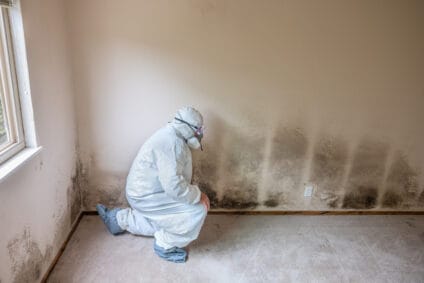
Many homeowners discover mold and genuinely intend to address it soon. But soon has a way of turning into weeks or months, and by then, what could have been a manageable job has grown into something far more involved. The cost homeowners face for delaying mold remediation isn’t just financial. It shows up in your home’s structure, your family’s health, and the overall scope of work required to fix it.
Mold Spreads Faster Than Most People Expect
Mold is a living organism that grows by releasing spores into the air. Those spores travel through air currents, landing on new surfaces where they can take hold if moisture is present. In a home with any water intrusion or elevated humidity, mold can spread quickly and quietly from one room to adjacent areas.
A small patch on a basement wall might look contained, but behind that wall, in the insulation, along the framing, and potentially into the subfloor, growth is often already established. Homeowners who put off mold remediation risk allowing hidden mold growth to expand well beyond what is visible on the surface.
Keeping up with home maintenance isn’t always easy, especially when a problem like mold isn’t fully visible until it’s already spread farther than expected.
What Delaying Mold Remediation Actually Costs
The case for acting quickly is straightforward: the longer mold grows, the more it damages, and the more expensive it becomes to address. Here’s where those costs show up.
Structural Repairs Get More Expensive
Mold breaks down organic materials over time. It deteriorates drywall, wood framing, subfloor boards, and insulation. A home with mold that’s been growing for a month looks very different from one where it’s been present for six.
When structural components are compromised, mold remediation teams must do more than remove the growth. The work includes replacing damaged materials, which significantly increases the overall project cost. Homeowners who catch the problem early often avoid major structural repairs entirely. Those who wait frequently don’t.
Health Risks Increase Over Time
Mold exposure has been linked to respiratory issues, headaches, and allergic reactions. The longer the mold is present in a home, the longer the people living there are exposed to elevated spore levels in the air.
For households with children, elderly residents, or anyone with asthma or allergies, prolonged exposure carries a greater risk. Scheduling mold remediation professionals to perform early reduces the duration of that exposure and the likelihood of ongoing symptoms.
The Remediation Scope Expands
A small mold problem requires less labor, fewer materials, and less containment than a large one. When mold remediation is scheduled early, professionals can work more efficiently while the problem is still contained to one area.
Once mold has spread to multiple surfaces or rooms, the project requires more thorough containment, more demolition, and longer drying and treatment timelines. That translates directly to higher costs and a longer disruption to your home. Homeowners who delay often end up paying significantly more than they would have if they’d called sooner.
Common Reasons Homeowners Wait, and Why It Backfires
A few reasons homeowners delay mold remediation and what tends to happen as a result.
“I’ll wait to see if it gets worse.” Mold doesn’t stabilize on its own. Without addressing the source of moisture and removing existing growth, the problem will continue to develop. Waiting to see if it gets worse usually means it does.
“I’ll try to handle it myself first.” Surface cleaning can temporarily remove visible mold, but it doesn’t address growth within walls, flooring, or insulation. Without professional remediation, mold often returns because the underlying moisture source and spore presence haven’t been fully resolved.
“I don’t want to disrupt the house.” Proper mold remediation involves containment measures that protect unaffected areas and limit disruption to the rest of your home. The disruption from a larger, delayed project is almost always greater than the disruption from addressing the problem early.
What Professional Mold Remediation Involves
When a professional team handles mold remediation, the process goes beyond removing what’s visible. It starts with identifying and addressing the moisture source that allowed mold to grow in the first place. Skipping that step means the problem can return, even after remediation is complete.
From there, professionals contain the affected area to prevent spore spread during removal, remove contaminated materials where necessary, and treat surfaces to inhibit future growth. Air scrubbers, industrial-grade dehumidifiers, and containment barriers are all part of a thorough remediation process.
That’s what distinguishes professional mold remediation that homeowners can rely on from surface-level cleanup, which only handles what’s visible.
For homeowners who have also experienced any water intrusion or flooding that contributed to mold growth, addressing the water damage alongside the mold is an important step. Handling both issues together reduces the chance of mold returning after remediation is complete.
Mold Remediation Indianapolis
When you find mold in your home, the right time to act is now. Every week of delay gives mold more time to spread, more material to damage, and more scope to grow. What starts as a manageable job can become a significant and costly project if it’s put off long enough.
Don’t wait for the problem to get worse. Contact our team at Pure Air Environmental today to schedule a mold assessment and get a clear picture of what you’re dealing with. Our professionals are ready to help you resolve the problem before it grows into something much bigger.